In this article on the Santhal Pargana uplands, Kulesh Bhandari, an independent biodiversity researcher from Jharkhand, describes walking through mist-lit Sal forests, attentive to the landscape’s quiet rhythms. His journey across Kathi Kund, Barapaghar, Danro, and Sundar Pahari blends ecological mapping with tribal knowledge, revealing an increasingly fragile yet enduring relationship between communities and their living forests.

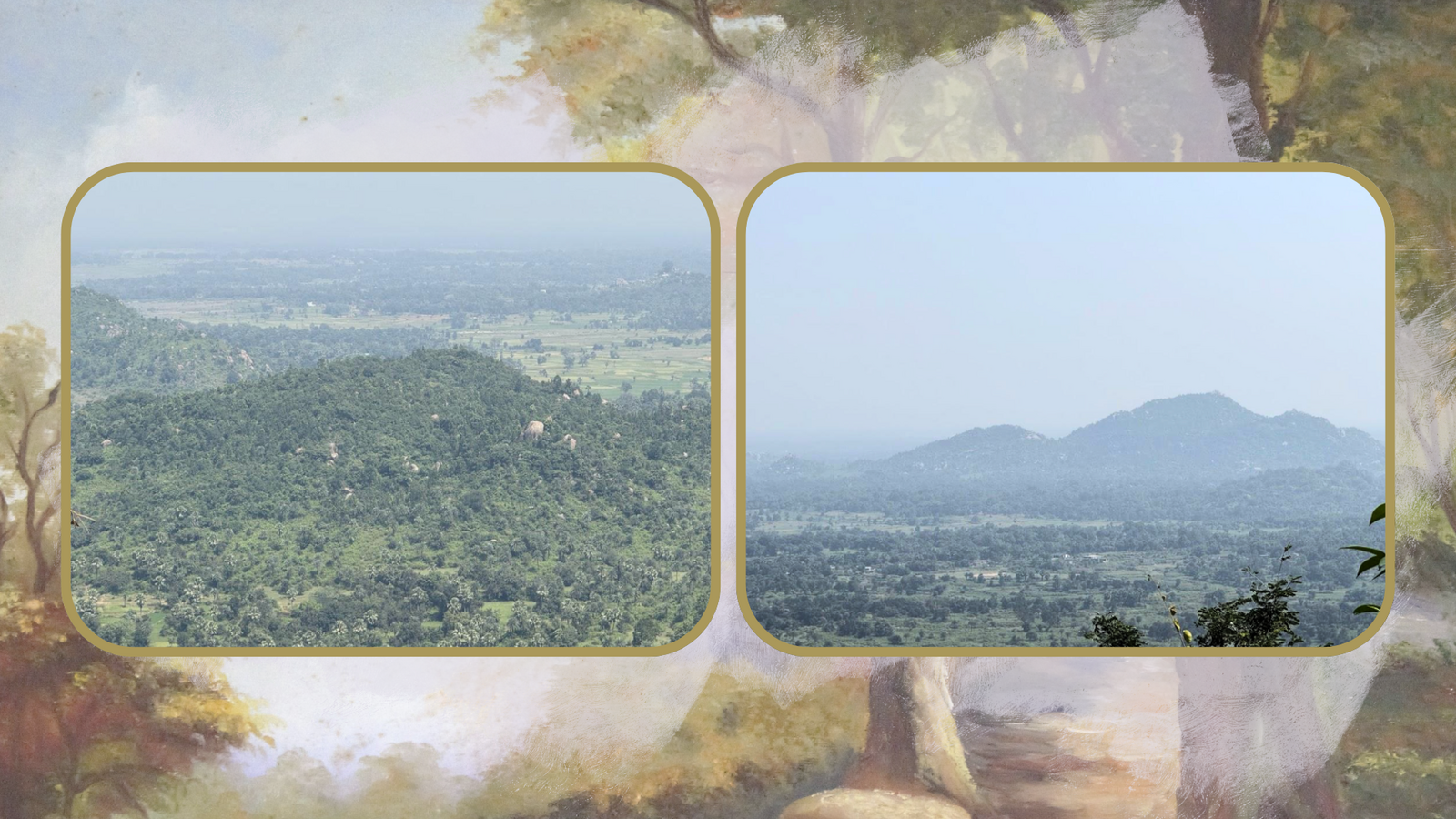
When the morning mist lifts over the hills of the Santhal Pargana region of Jharkhand, the forests begin to breathe in slow rhythm — Sal leaves whispering stories of roots, soil, and forgotten songs. I often begin my day there, notebook damp with dew, listening not for words but for the language of the land. In these uplands of Jharkhand, science is not just an academic pursuit; it is a dialogue between people, plants, and the spirits of the earth.
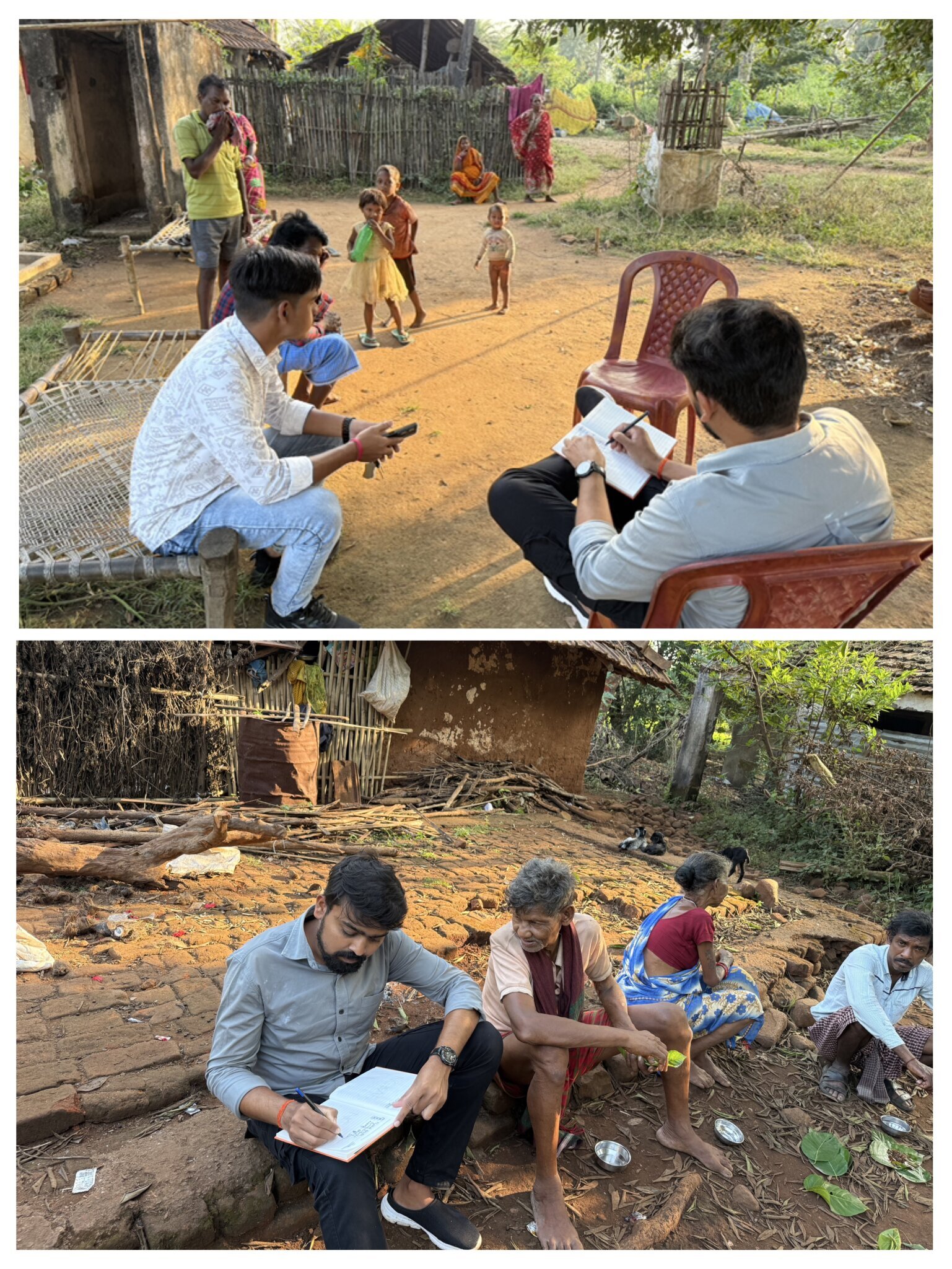
My research began as part of a biodiversity mapping study, exploring the geo-ecological zones across Kathi Kund, Barapaghar, Danro (Dumka, Jharkhand), and Sundar Pahari (Godda, Jharkhand )— landscapes where tribal communities have lived for centuries, weaving their survival with forest wisdom. Every hill here holds a memory. I met elders who could read the forest like a book; predicting rain from the flight of herons, naming each medicinal root with reverence, and teaching me that knowledge grows best in humility.
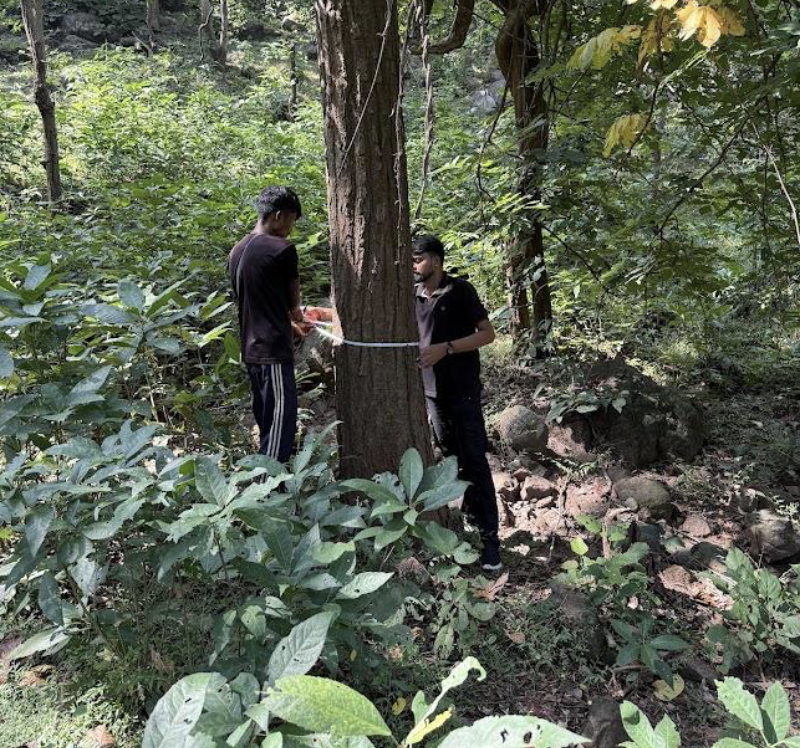
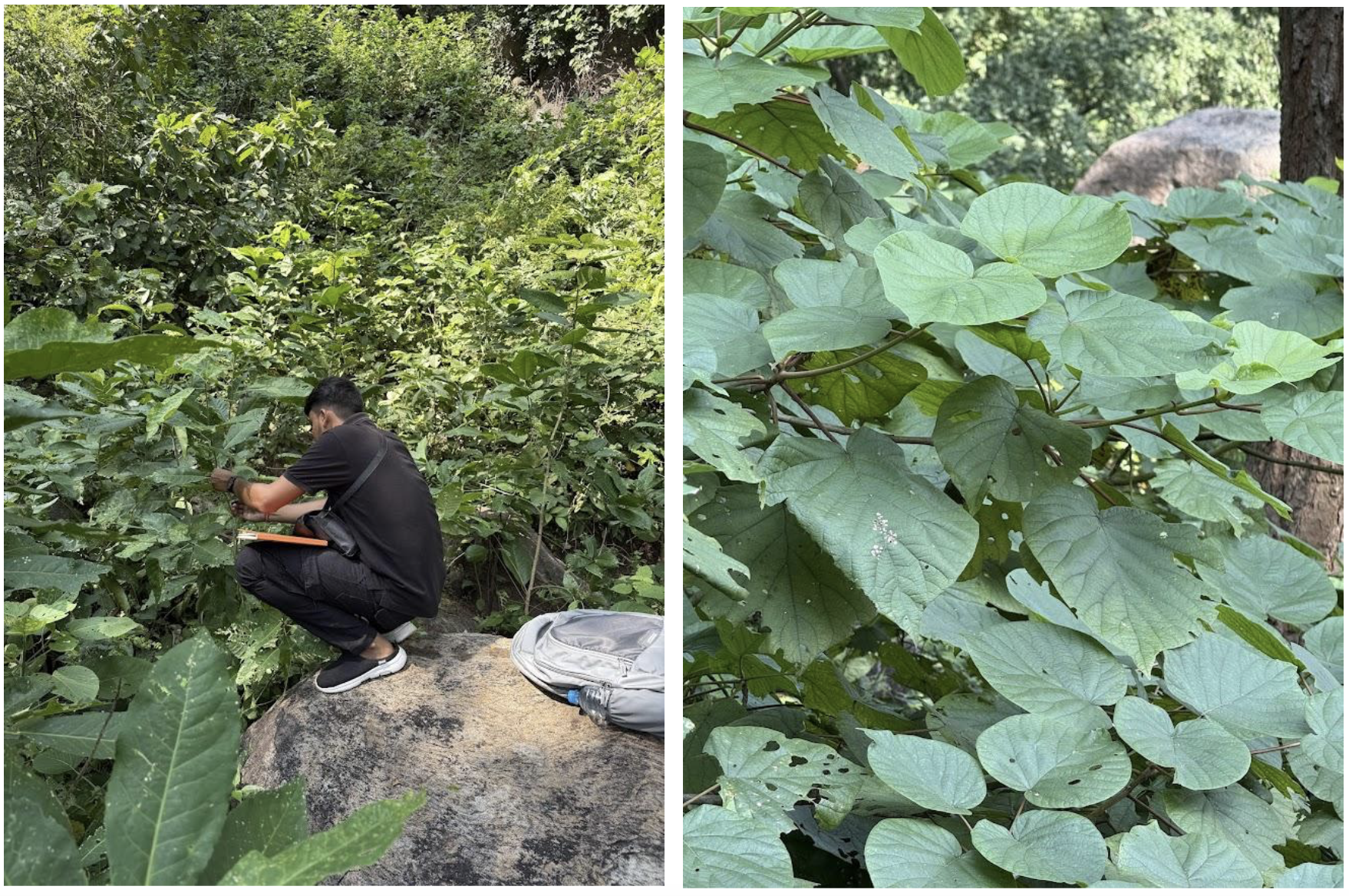
I documented species from edible wild leaves to medicinal tubers, carefully collecting samples, labeling them with field notes, and tracing their ecological patterns with tools like QGIS (Quantum Geographic Information System) which is an open-source software widely used in ecological and biodiversity studies to map species distribution, analyse elevation and vegetation data, and visualise spatial patterns in the field and Google Earth Pro which helps visualise landscapes in 3D, measure altitude and slope, mark GPS locations, and track changes in forest cover or land use over time. Yet, beyond data and coordinates, what I found most powerful was the relationship between humans and the forest; a rhythm of coexistence slowly fading in modern noise. This work was not just research; it was a rediscovery of how communities become custodians of biodiversity when they see the forest as kin rather than a resource.
Attending the 9th International Congress on Zoology and Technology (ICZAT 2025) in Ankara, Turkey, though happened virtually, was an experience that quietly shifted my understanding of where my work stands in the wider world. Researchers from Europe, Central Asia, and the Middle East spoke about large protected reserves, automated monitoring systems, and datasets built over decades. In that room, my work originated from a very different place: from hills where scientific documentation is still in its infancy, where biodiversity thrives not behind research fences but within the memories, practices, and rhythms of tribal communities.
Several participants told me it was the first time they had seen a systematic biodiversity gradient study from the uplands of Jharkhand.
One senior ecologist said during a conversation, “Regions like yours are the missing pages of India’s ecological atlas”. That line stayed with me. It reminded me that field notes, local names, hand-written labels, and quiet hours spent listening to forests can also contribute to science in a way that large datasets sometimes cannot.
Presenting my work at ICZAT made me realise something essential — that Eastern India holds ecological knowledge the world has not yet fully looked at. The landscapes of Kathi Kund, Sundar Pahari, Rajmahal Hills, and Rajapathar may not often appear in scientific meetings, but the stories they carry are no less important.
And sometimes, the most meaningful insights come not from big laboratories, but from hills where people have been reading the forest long before the word “biodiversity” existed.
(1) As a young field researcher working in the tribal uplands of Eastern India, my work is shaped not by laboratories alone but by landscapes, elders’ knowledge, and long walks across hills that raised me.
(2) My understanding of these forests has grown slowly over the years — visiting the same hills through monsoon, winter, and summer, watching how colours, silences, and species shift with every season.
(3) My documentation process spans field notebooks, labelled specimens, GPS-tagged photographs, geospatial layers on QGIS, and small ethnobotanical conversations with local communities — each adding a different layer to the truth of these forests.
(4) If these notes help bring Santhal Pargana’s forests into larger ecological conversations, then the voices of these hills will travel farther than I ever could.
I carried the echo of these hills with me. Each photo, each specimen label, carries the essence of Santhal Pargana, the pulse of a living landscape that still remembers its people. The journey continues, not just as a researcher, but as someone learning to listen to forests again.