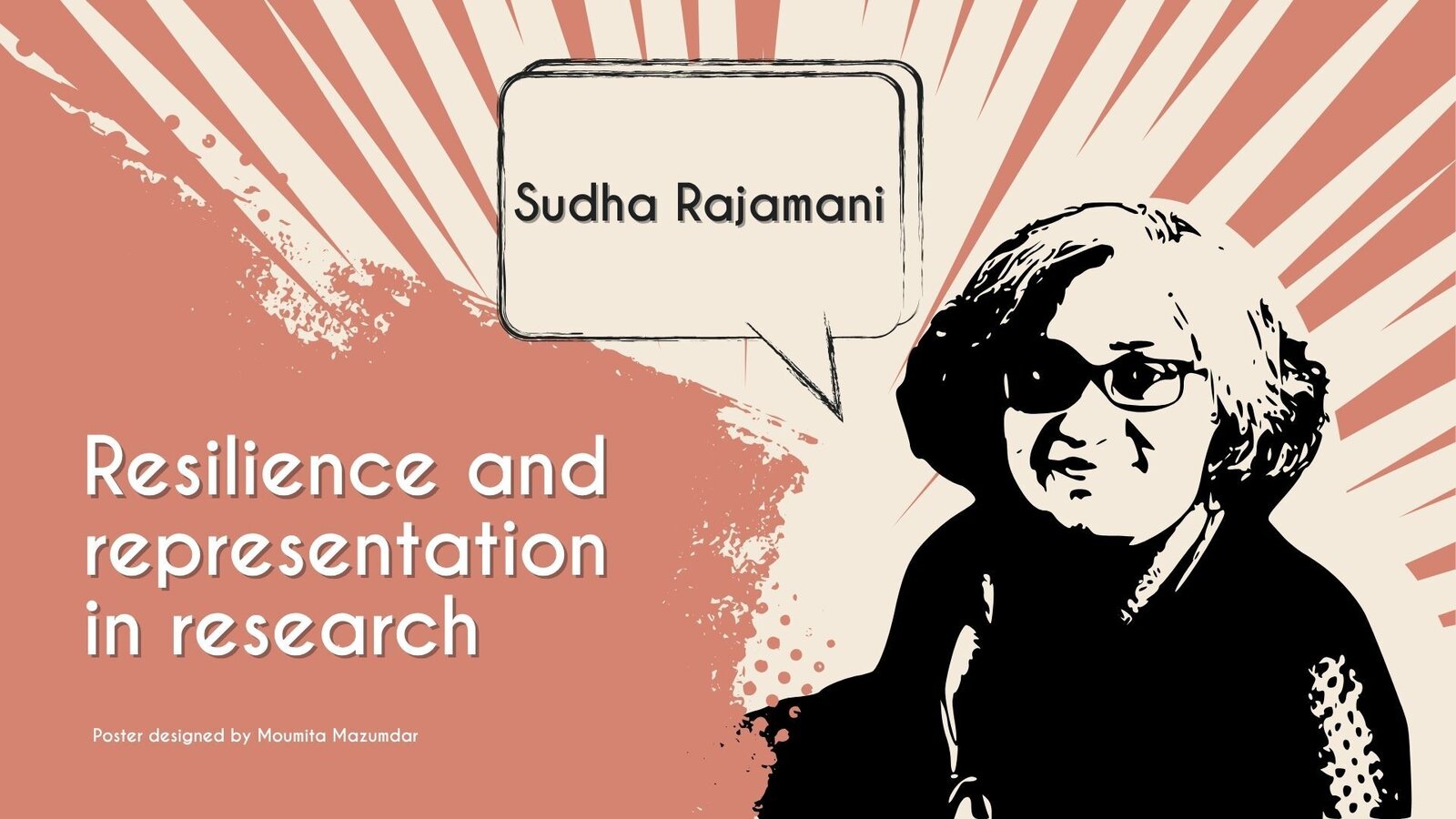
In the next interview in this series, we spoke with Sudha Rajamani, a Professor at the Indian Institute of Science Education and Research, Pune, whose career spans biochemistry, astrobiology, and now, strengthening the community of Indian women in science.

From biochemistry to astrobiology
Sudha’s research trajectory has been anything but conventional. After completing her PhD in Biochemistry at the National Institute of Immunology in Delhi, she moved to the University of California, Santa Cruz (UCSC), for a postdoctoral research project focused on Parkinson’s disease. But soon, her path shifted.
“An unforeseeable change in my career trajectory led me to astrobiology”, she recalls. She joined Dr David Deamer at UCSC, immersing herself in prebiotic chemistry, which is the study of how simple chemical elements found on Earth combined to form relatively complex organic compounds, such as amino acids, sugars, and nucleotides. Subsequently, she worked with Dr Irene Chen at the Harvard Centre for Systems Biology before returning to India. Back in India, her group at the Chemical Origins of Life (COoL) lab at IISER Pune studies how life first emerged by decoding the chemical processes and environments that shaped Earth’s earliest biology.
L.S. Shashidhara, an invaluable mentor, whose trust in this emerging field, and the unwavering support of both him and IISER Biology colleagues, were crucial in laying the foundations of Sudha’s astrobiology career in India.“I had to carve a niche in an area that was barely existent in India”, she says.“There were challenges in terms of recognition and acceptance, but over time the work gained traction”.
She now ensures that she is a mentor to other early-career researchers in the field who wish to return to India to establish their own labs in the broader area of astrobiology.
Even though empathetic and good mentors and allies are not easy to come by, when they do, it is crucial to make the most of their time, experience, and presence in your life. Importantly, these interactions inform your own mentorship skills, shaping and moulding your ability to mentor when it’s your turn”.
A platform to support women in biology
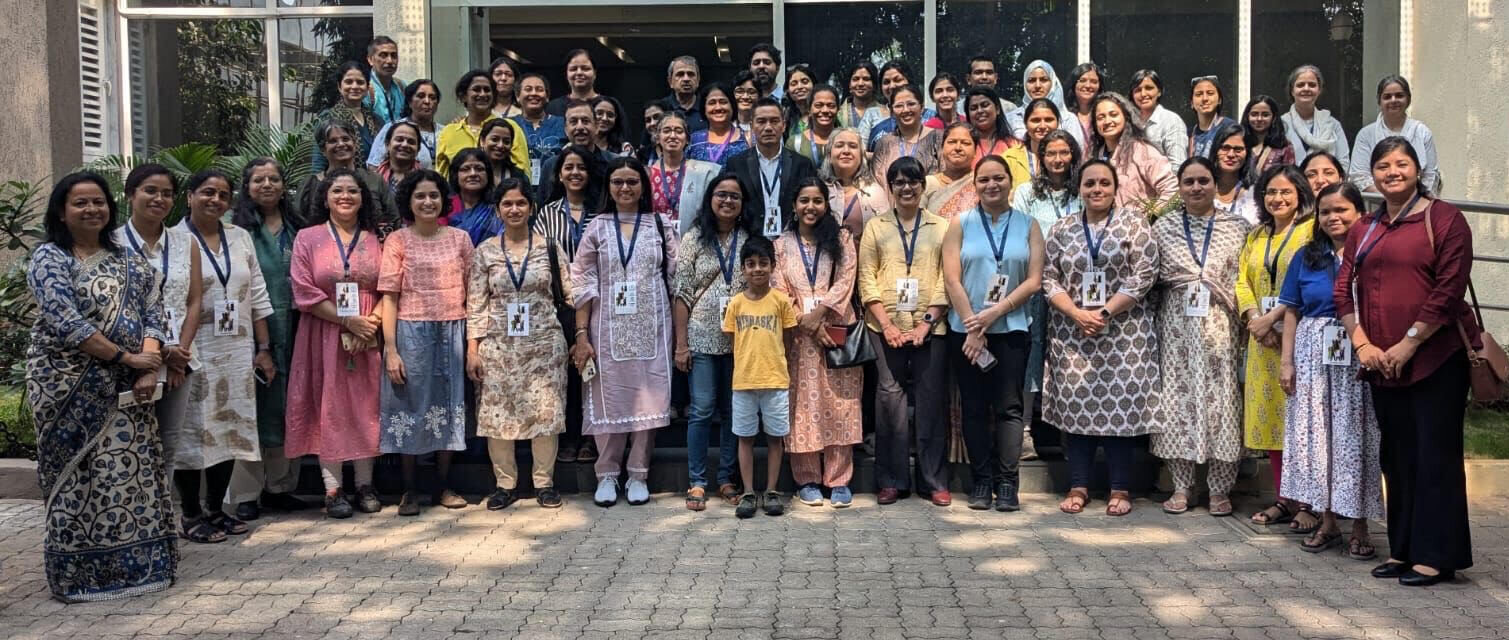
Many of the founding members of POWERBio are connected with IISER Pune. Sudha attributes“over chai conversations” and other informal discussions, which laid the foundation that turned into a shared vision of creating a platform to support women in biology.
As the Chair of IISER Pune’s Women in Science Committee, Sudha was already aware of the structural barriers women face. She realised, “It’s not enough to just acknowledge that representation is low — we need proactive measures to improve it”.
She highlights the PhD experience as one example. “We’ve seen women students take six months to a year off to start a family, but their fellowship clocks don’t stop. They fall behind in finishing their PhDs”. The same pattern also affects young faculty. “A woman assistant professor may have a baby soon after joining. Policies exist that are well-meaning on paper. However, ‘apples to apples’ comparisons with male peers still happen, which is unfair and needs to be acknowledged and addressed. They lose valuable time in publishing and grant-writing, which disadvantages their careers”.
POWERBio emerged from numerous such conversations to bridge these gaps by advocating for systemic changes at multiple levels, helping women restart their careers after significant life events. “Scaling these efforts is challenging, because every institute functions differently, but we hope to be able to create modules that can be adapted more widely”, Sudha notes.
The need to ‘formalise’ informal networks
POWERBio is not yet a registered body, but its members believe that formalisation may be necessary to amplify their voice. For now, much of POWERBio’s support is informal. “Our focus is on facilitating workshops that are specifically tailored to discussing issues that women faculty face in their careers. These workshops include panels where senior women researchers and allies discuss measures that could potentially mitigate the more common problems that most of us face in our workplaces. Additionally, people reach out privately — ‘I’m facing this issue, can you help?’ Sometimes we can, sometimes we can’t”, Sudha explains. She points out that biology has not received the same organised focus as physics or mathematics, where Women in Science groups are long-standing and institutionalised. “There’s a perception that biology has more women, but faculty numbers still hover at a quarter or less in most departments. The leaky pipeline is very real”, she says.
Bias and resilience
While Sudha has been fortunate with mentors (sadly, not common in science), she has not been immune to bias. In addition to having to deal with the widely prevalent everyday biases, she has also had to contend with the prejudices that stem from being a single woman (by choice).
When men are forthright, they’re called straightforward. When women do the same, we’re labelled aggressive”, she says. “I’ve been told often that people are afraid of me. I call it ‘healthy respect’, and my response is: let them be. I don’t demand respect, but I will command it”.
While she may not be raising a family in the traditional sense, she does have to care for her elderly parents, which comes with its own set of challenges.
She has also witnessed many women friends and colleagues drop out of science, whether due to unsupportive advisors, abusive environments, or the need to prioritise family. “The spectrum is wide, and the losses are real”, she reflects.
Changing the conversation
Through POWERBio and, especially, IISER Pune’s Women in Science Committee, Sudha has been experimenting with new ways of engaging the community. Instead of stand-alone “Women in Science” events, they began embedding gender conversations within departmental seminars given by invited women researchers from diverse science careers. “Attendance went up dramatically”, she says. “Now, we ask speakers to weave their scientific story with their personal journey, so audiences engage with both”.
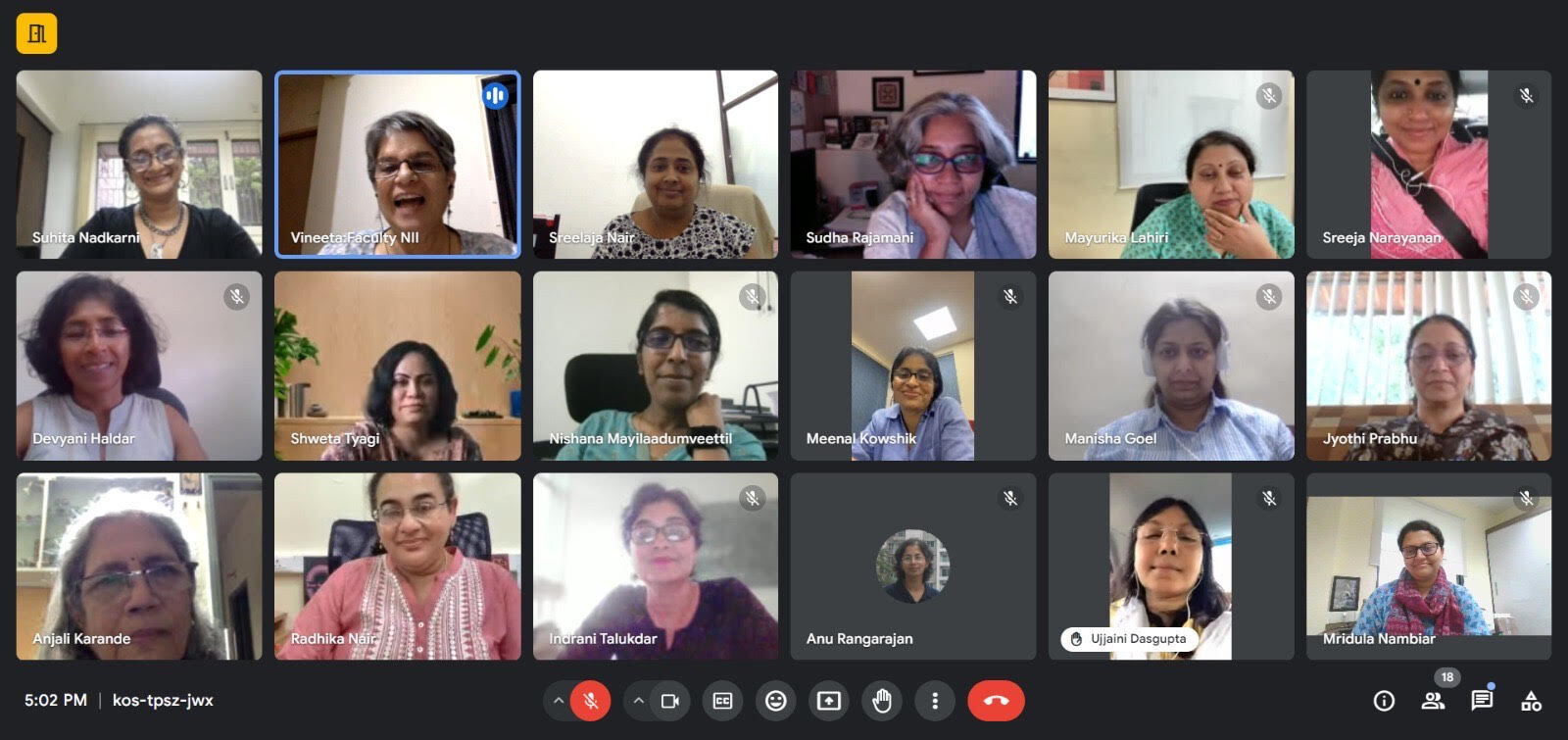
The turnout has, however, been low at awareness workshops, including those on sexual harassment, which they have been trying to make mandatory. “It showed us the need to work with internal committees, which can mandate attendance”, she notes. She also highlights the need for greater inclusion of administrative and technical staff, who often face more entrenched hierarchies but rarely approach committees for support —
These structures should serve everyone in the institute, not just academics. I also strongly believe that not everyone trained in science has to remain in academia. There are fulfilling careers in communication, pedagogy, illustration, outreach, and policy. Representation in those spaces is just as important.”
POWERBio, as Sudha sees it, is still evolving. Its workshops and peer networks are designed to demonstrate what is possible when driven, clear-minded women come together to facilitate change. The long-term goal is to create structures that allow women to thrive without apology.
For her, the vision is clear: dismantling guilt, strengthening mentorship, and building horizontal support networks across institutions. In doing so, she hopes to make Indian science a place where women can not only survive, but flourish.
Ultimately, the sincere hope and aim is to help address and resolve these issues with POWERBio colleagues, whether through institutional-level changes or by positively influencing science policy for a broader impact.